
Select bankers will meet RBI Deputy Governor Subir Gokarn, who is in-charge of the monetary policy department, and other central bank officials on July 12.
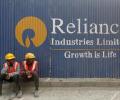
Reliance Industries shareholders will have to pay only 25 per cent for subscribing to the company's mega Rs 53,125-crore rights issue, and the balance will have to be paid in two instalments in May and November next year, the company said.
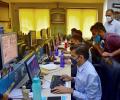
SBI was the top gainer in the Sensex pack, jumping around 3 per cent, followed by Kotak Bank, Axis Bank, Bajaj Auto, Tech Mahindra, UltraTech Cement and PowerGrid. NSE Nifty rose 36.40 points to 15,337.85.

Casual labour, which is the type of employment provided by agriculture, yields much lower wages -- of the order of Rs 291 per day. Labour would not voluntarily shift to this lowest wage-rate sector unless it had no better option, observes Mahesh Vyas.
Reserve Bank of India has stepped up checks on the use of funds borrowed from its liquidity window. The Central bank is keen to see that such funds are not diverted for lending purposes. Net borrowing by banks rose to a record Rs 1,48,490 crore (Rs 1484.90 billion) on Tuesday.

Bitcoin has been on fire ever since Musk announced that Tesla had bought $1.5 billion of the cryptocurrency, and that his electric-vehicle company would accept bitcoin from buyers.

Liquidity pushed benchmark indices 22% higher to become the best performing equity market globally

The Reserve Bank Officers Cooperative Credit Society, which caters to the credit needs of RBI officers posted all over India, has a fixed deposit of Rs 105 crore in the bank on which the RBI has placed various curbs for six months following revelations of irregularities.

The proposal to increase public float, hike income tax surcharge, move to tax share buybacks and lack of stimulus to shore up economic growth has hurt investor sentiment.

Ruia, a chartered accountant whose business ranged from sugar to textiles and heavy engineering to tyres, refused to comment on queries about his interest in Air India.

Bajaj Finance was the top laggard in the Sensex pack, dropping over 9 per cent, followed by Axis Bank, IndusInd Bank, HDFC, ICICI Bank and M&M. Reliance Industries, however, capped the losses by rallying over 3 per cent. Sun Pharma, Hero MotoCorp, L&T, PowerGrid and Bajaj Auto were also among the gainers.

The bulk of of trading on stock markets is done algorithmically, by computerised clerks working at the behest of human traders.

With enough liquidity in the system, lending and deposit rates are likely to fall further

It is easy to invest in exotic products but difficult to exit them. Think carefully before investing rather than being blown away by expected returns alone, suggests Mrin Agarwal, founder, Finsafe India.

When banks deposit their money with RBI, the central bank offers government securities of equal value. But now, it could be running out of enough securities to offer banks against the overnight deposits.

Top gainers in the Sensex pack were TCS, Bharti Airtel, Infosys, Axis Bank, L&T, ITC, PowerGrid, HCL Tech and Tata Steel, ending up to 2.39 per cent.

The increase in energy consumption was driven by renewables and natural gas, which together contributed three quarters of the expansion.

Hindustan Unilever Ltd, India's largest personal care product maker, on Tuesday reported a better-than-expected increase in its September quarter net profit and revenues, signalling a revival of demand following the world's biggest lockdown.

Dr Reddy's was the top gainer in the Sensex pack, rising over 3 per cent, followed by PowerGrid, TCS, HCL Tech, Infosys and Reliance Industries. On the other hand, L&T, IndusInd Bank, Bajaj Finserv and Bharti Airtel were among the laggards.

'If I close my housing loan, are there any investment avenues (the investment should provide liquidity) to save tax?'

Many investors, who have made money in the rising market of the recent past, are pulling out of equity funds, believing that they can earn more by investing directly.

Take a call to stay put or opt our based on whether you think the company will be able to find a strategic investor, suggests Sanjay Kumar Singh.

A bonus is given to existing stockholders in proportion to the number of shares they already hold.

Kotak Bank was the top gainer in the Sensex pack, ending 4.31 per cent higher. PowerGrid, TCS, ICICI Bank, SBI, HCL Tech, NTPC, Infosys, Bajaj Finance, HDFC duo, ONGC, Vedanta and IndusInd Bank too rose up to 2.84 per cent.

'This fall is nothing. We could see worse if everybody hits the panic button.'

In the entire 2017, FPIs put in a collective amount of Rs 2 trillion in equity and debt markets
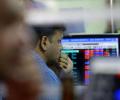
The index widened its loss towards the fag-end on emergence of intense selling in heavyweights like ITC, RIL and ICICI Bank. In percentage terms, however, Sun Pharma was the biggest loser with 9.39 per cent drop. Intra-day, the pharma major's shares tanked over 20 per cent.
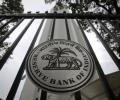
RBI may also be open to injecting liquidity through open market purchases of bonds but is resisting relaxing capital buffers for banks.

As the government plans to take sector-specific steps to tackle the slump, Finance minister Nirmala Sitharaman will soon hold talks with representatives from various sectors to get and take steps so that the confidence of those sectors can be restored.

India shifted gears in rejuvenating strategic ties with its major partners like the US and Russia and focused on drumming up global support for its distinct strategy in the Indo-Pacific to check Beijing's increasing muscle-flexing in the region.

Billionaire Mukesh Ambani's Reliance Industries Ltd on Friday announced the buyout of British battery maker Faradion Ltd for an enterprise value of 100 million, as the oil-to-retail conglomerate continued with the acquisition of end-to-end technology for its multi-billion-dollar clean energy portfolio. Reliance New Energy Solar Ltd (RNESL), a unit of the nation's most valuable company, signed definitive agreements to acquire 100 per cent shareholding in Faradion for an enterprise value of 100 million and will invest an additional 25 million as growth capital to accelerate the commercial roll-out, the company said in a statement. Based out of Sheffield and Oxford in the UK and with its patented sodium-ion battery technology, Faradion is one of the leading global battery technology companies.
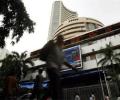
Broking firm Jefferies says Indian financial system is now flooded with the kind of liquidity witnessed in 2005-07 and 2009-10

Faster account opening, which allows investors to start trading without ever leaving their homes or visiting a physical branch of their local brokerage has played a role in the surge.

England batsman Kevin Pietersen looks poised to play in the third Ashes Test against Australia at Old Trafford from Thursday after recovering from a calf injury, captain Alastair Cook said.

The biggest gainers on both bourses were Bharti Airtel, HDFC duo, L&T, Bajaj Auto, Kotak Bank, Reliance Industries, Axis Bank, ICICI Bank, SBI, ITC and Bajaj Finance, rising up to 4 per cent.

Top gainers in the Sensex pack included Hero MotoCorp, Maruti, M&M, Bajaj Auto, HUL, HCL Tech, Bajaj Finance, ITC, HDFC and L&T, rising up to 7.51 per cent.

To minise wasteful administrative costs, number of enterprises in strategic sectors will ordinarily be only one to four; others will be privatised/merged/brought under holding companies, she said.

At the outset, decide whether you want to be a trader or an investor, suggest Sarbajeet K Sen and Sanjay Kumar Singh.

While sale of residential properties increased only marginally despite plethora of steps taken by the government through the year, office space leasing rose 40 per cent to touch an all-time high of 46.5 million sq ft -- a trend that drew investors to lap up India's first Real Estate Investment Trust at an issue size of nearly Rs 5,000 crore.

Market participants are hoping for a few tweaks on the taxation front which will encourage consumers and businesses to spend.
